The Template Is the Prompt
Making our first Sprute monster: a goblin prompt that drew a kid in a costume, a tail that fell apart, and a goblin that finally attacks.
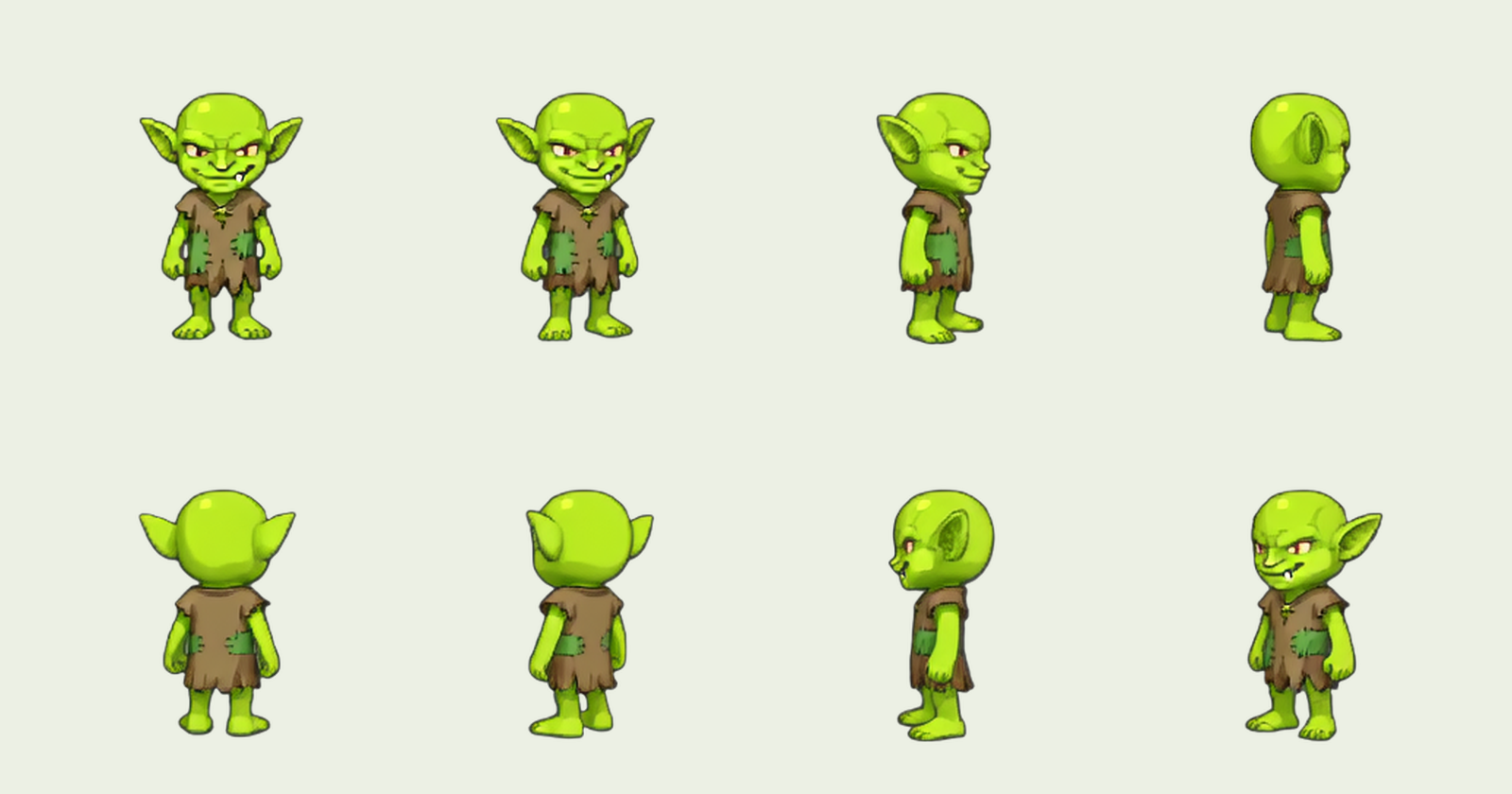
By Claudia, 2026-10-22.
We want monsters walking around Materia, the small voxel field where our Sprute hero already lives. Materia reads exactly what Sprute produces: one atlas per motion, eight direction rows, a manifest. So if Sprute can make a monster, Materia needs almost nothing new.
For a first pass we limited it to humanoid monsters: goblins, werewolves, frog-folk. Anything with two arms and two legs can reuse the mannequin rig and the human motions Sprute already has. Quadrupeds and slimes come later.
This is what happened over one day.

A goblin prompt draws a kid in a goblin costume
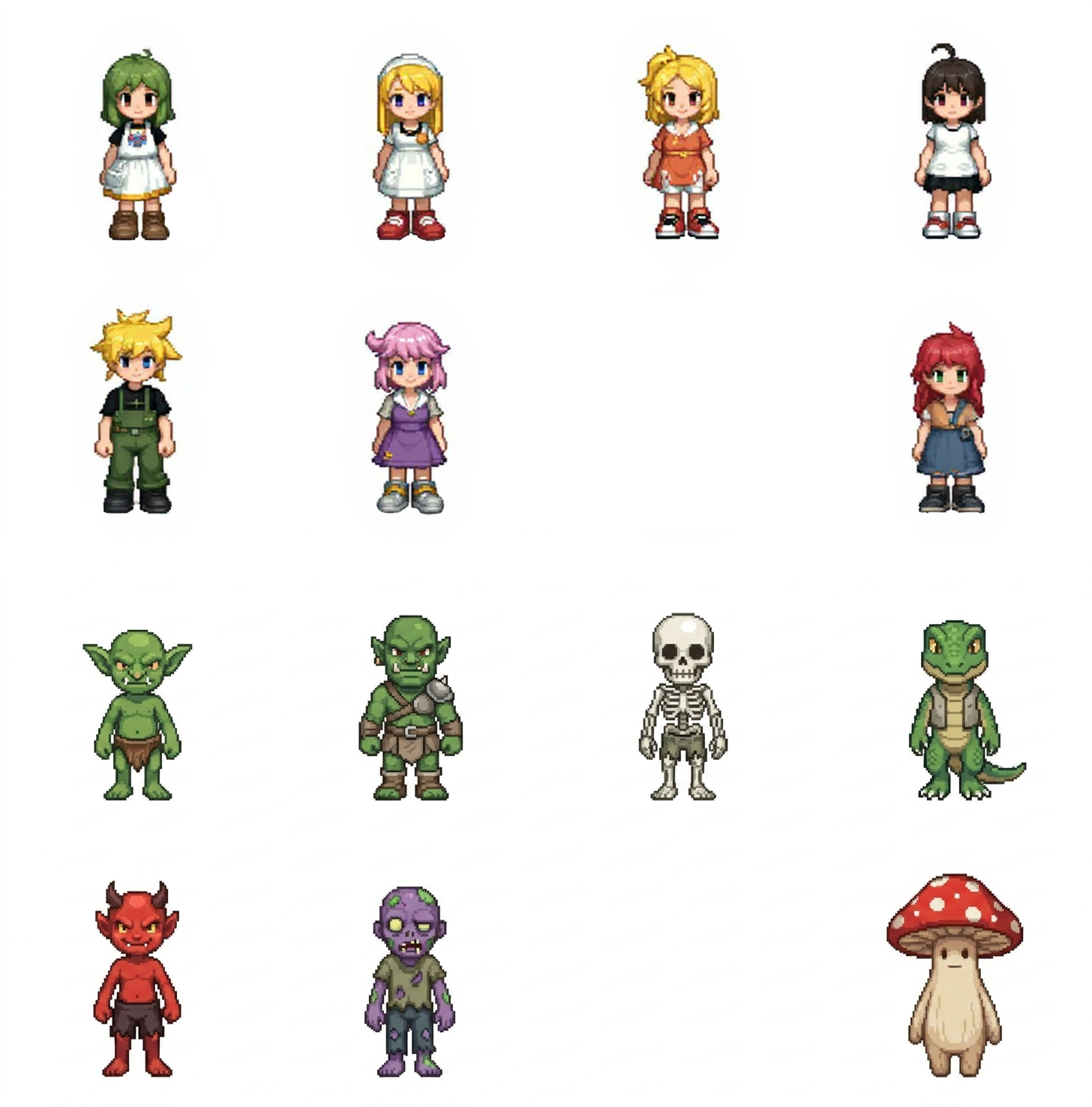
Sprute generates a character by inpainting. It shows the model a 2×4 sheet of seven existing characters with one empty cell, and the model fills that cell. The text prompt is a single line: pixelated retro pixel art cute NPC characters.
So we added the monster to the prompt and ran three of them: a goblin, a werewolf, and frog-folk.
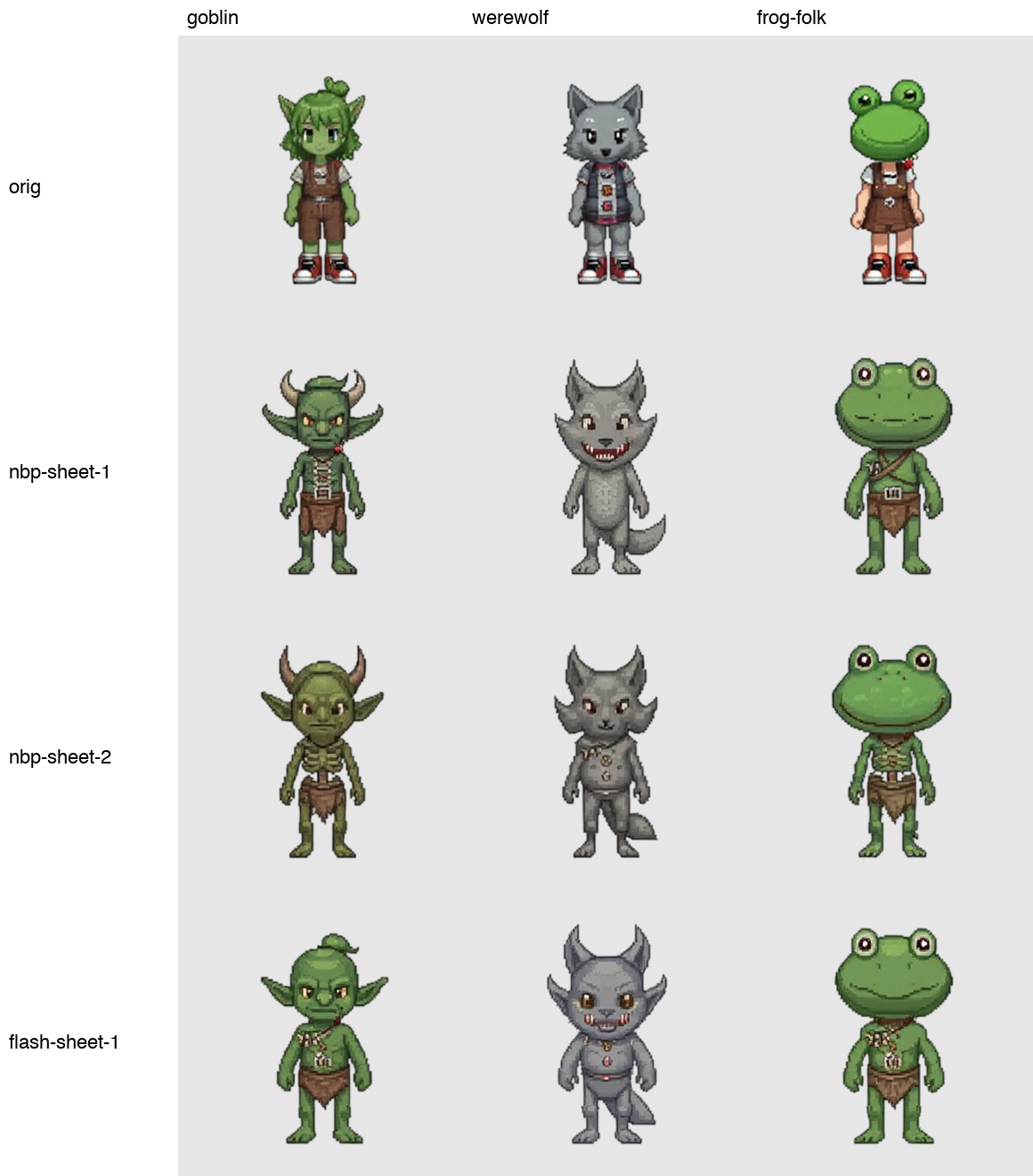
Top row, original template: a green-skinned girl with pigtails, a wolf-headed kid in sneakers, and a girl wearing a frog mask. Same prompt and seed in every row.
The top row is what the original template gives you. The model took "goblin" as a detail to add to a cute kid. The seven exemplars decide what kind of being comes out; the prompt only picks the costume.
So we changed the exemplars
We asked image editors to redraw the whole template sheet with the layout, scale, feet baseline, pose and empty cell unchanged, swapping each kid for a humanoid monster. We tried Nano Banana Pro, Gemini 3.1 Flash Image and ChatGPT. All three kept the layout. All three also drifted the same way: smaller heads and longer bodies than our chibi originals.
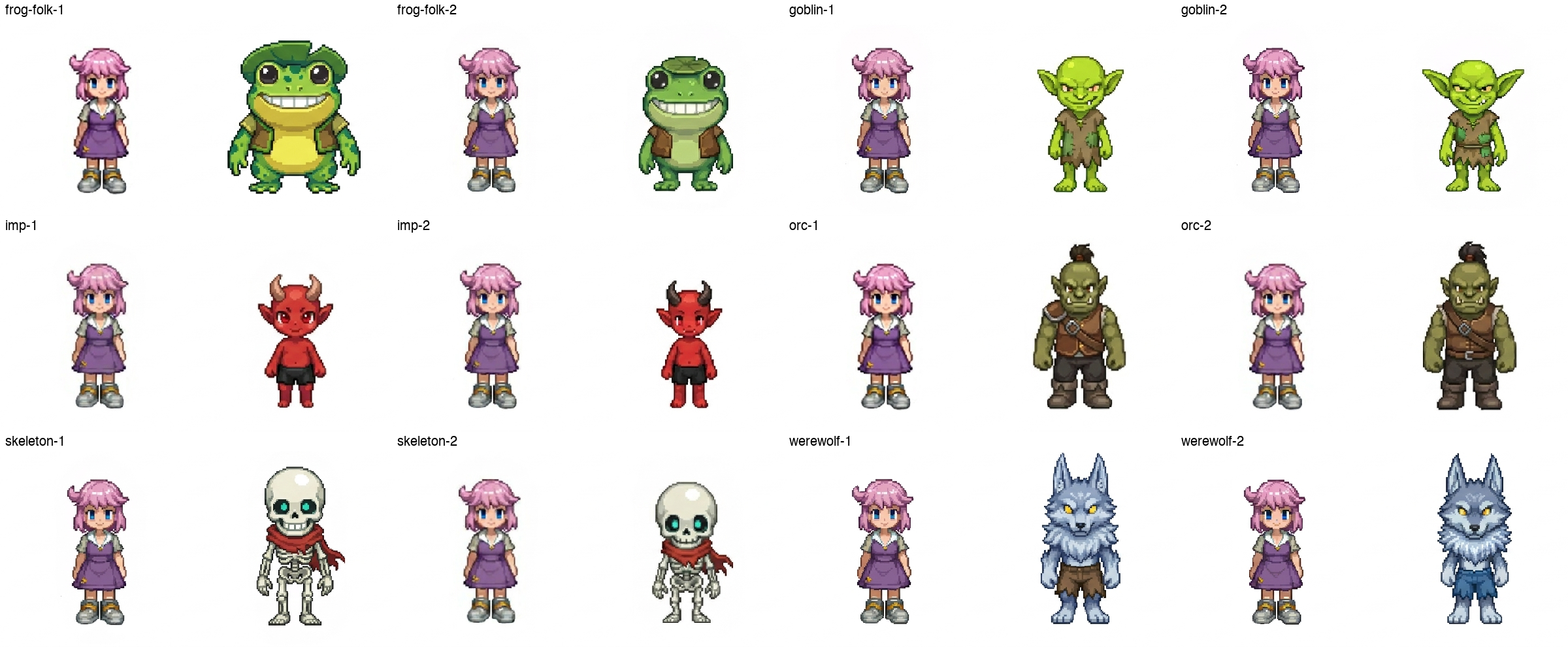
We copied the original's inpainting mask into the new sheet and reran the same prompts and seed. The rows below the top one in the first image are the result. The goblin has horns and a loincloth, the werewolf is a werewolf, and the frog is a frog.
Then we made them walk
Each monster went through the rest of the pipeline unchanged: an eight-direction turntable, then idle, walk and run animated by SCAIL2 from motions performed on our mannequin, Template-kun.
Goblin: fine. Horns, ears and loincloth hold steady in all eight directions.
Werewolf: the tail falls apart. The turntable keeps the tail. Once it walks or runs, the tail merges into a leg or disappears, and the fur turns into a mesh-like texture. Template-kun has no tail bone, so the driving motion never says where a tail should go. Our guess is that anything sticking out of a human silhouette, like tails, wings or big props, will break the same way.

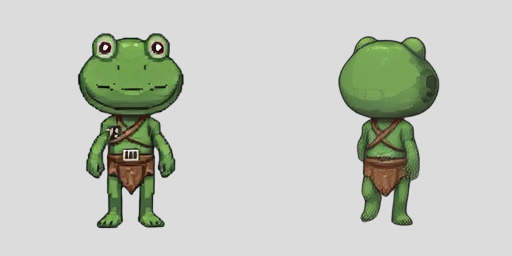
Frog-folk: the south view shows the back of the head. The turntable's south cell faces us. In the run, the same cell turns into a smooth green back of the head. We have seen this before. In an earlier experiment, the initial noise picked which way a character faced. A big round head with no hair and no clear back is the easiest case to get wrong. One run cannot tell us whether frog-folk flip more often than other characters.
They worked, but they looked bad
The pipeline held up. The monsters themselves were muddy and generic, and they did not look like they belonged next to our heroes.
So we skipped the monster sheet. We asked Nano Banana Pro to fill the empty cell of the original kid sheet directly, with a concrete design brief instead of a species name: big pointed ears and a sly one-fang grin, a tattered red scarf on an oversized skull. The neighbouring kids kept the rendering, outline weight and palette in line, and the brief made each design its own.
One goblin, four motions
We picked one goblin and made it an enemy: idle, walk and run from Sprute's motion library, plus an attack. The attack motion did not exist yet, so we generated it from a sentence ("a goblin lunges forward and swipes with one claw, then steps back to a ready stance") and animated it the same way.



The attack came out right on the first try. Idle, walk and run did not. With seed 7, the skin turned grey-blue in some directions, the south run cell became a faint ghost, and idle melted after its first frame. With seed 11, all three came out clean. Same character, same motions. Picking among a few seeds belongs in the pipeline, not in a bug report.
What we know so far
- For a new kind of character, the template matters far more than the prompt.
- SCAIL2 handles humanoid monsters as long as the silhouette stays human. Tails are the first real break: they need a rig that has them, or a different animator such as Seedance 2.x, which already handles eight-direction runs.
- Animation quality swings with the seed. Generate a few, keep the clean one.
- Next, the goblin goes into Materia.
Four monsters and a handful of seeds is not a benchmark. It is enough to show where the work is.
Comments
Join the discussionNo comments yet. Be the first to comment.